 WalkitoGet the app
Heel fat pad syndrome: what it is, how it differs from plantar fasciitis, and what the evidence says
Heel fat pad syndrome is the thinning or damage of the fatty cushion under your heel bone. It causes a deep, bruise-like pain in the centre of the heel, especially on hard surfaces or barefoot. It may be the second most common cause of plantar heel pain after plantar fasciitis, yet the research behind it is thin. A 2022 scoping review found only seven original studies.
This page covers what is known about heel fat pad syndrome, how to tell it apart from plantar fasciitis, and which conservative steps have at least some support. If your pain is more of a sharp pull at the inner heel with your first steps in the morning, heel pain in the morning is probably the better page. If it is at the back of the heel near the Achilles, see Achilles tendonitis exercises or Haglund's deformity.
Walkito turns these exercises into a short daily plan that adjusts to how your feet felt this morning. Get Walkito on the App Store →
What is the heel fat pad and what goes wrong?
The heel fat pad is a specialised cushion of fat and connective tissue under the calcaneus, your heel bone. It is built in chambers separated by fibrous walls (septa) that absorb impact when you walk or run. A healthy heel pad is about 1 to 2 centimetres thick.
In heel fat pad syndrome, this cushion thins, stiffens, or breaks down. The septa lose elasticity, the fat compresses, and the heel bone sits closer to the ground. The result is pain when you step on hard surfaces or walk barefoot, as though you are walking on a stone.
The 2022 scoping review by Chang and colleagues found that research often describes the condition as "fat pad atrophy," but the problem can also involve inflammation, fibrosis, or septal defects without outright thinning. On ultrasound, a fat pad under 1 centimetre is generally considered atrophied.
How common is heel fat pad syndrome?
In a cross-sectional study of 250 people with plantar heel pain, Yi and colleagues found fat pad atrophy in 14.8% of cases. Plantar fasciitis was the most common cause at 53.2%, and 9.2% had both conditions together. The study used ultrasound measurements and clinical criteria to separate the two.
The 2022 scoping review noted that the 14.8% figure comes from two studies and that the true prevalence is uncertain. Fat pad syndrome is often misdiagnosed as plantar fasciitis because both cause plantar heel pain and can coexist. When the standard treatments for plantar fasciitis do not help, fat pad atrophy is one of the conditions worth reconsidering.
How is fat pad pain different from plantar fasciitis?
The two conditions overlap but have distinct patterns. Fat pad pain is a deep, dull ache centred under the heel bone. It is worst on hard surfaces, when barefoot, and after prolonged standing. It does not usually have the sharp "first-step" character of plantar fasciitis and may not warm up with movement.
Plantar fasciitis pain is sharpest at the inner heel, peaks on the first step after rest, and improves once you are walking. If you press on the centre of the heel and it feels like the bone is right there under your finger with very little cushion, fat pad atrophy is more likely.
You can have both at the same time. The 2011 study found both conditions in 9.2% of the sample. Having plantar fasciitis can also lead to fat pad problems: when the fascia is injured, the way you distribute weight changes, and that extra pressure on the heel pad speeds up wear.
| Feature | Heel fat pad syndrome | Plantar fasciitis |
|---|---|---|
| Pain location | Centre of the heel, directly under the bone | Medial (inner) heel, near the arch |
| Worst when | Hard surfaces, barefoot, prolonged standing | First steps after rest, then eases |
| Pain character | Deep, bruise-like ache | Sharp, pulling |
| Warms up? | Often does not | Usually improves with a few minutes of walking |
| Palpation | Thin padding, calcaneus easily felt | Tender at the medial calcaneal tubercle |
What causes the heel fat pad to thin?
Age is the biggest factor. After about 40, the fat pad naturally loses water, collagen, and elasticity. Years of high-impact activity, prolonged standing on hard surfaces, and walking barefoot accelerate the process.
Other risk factors include higher body weight (more force per step), repeated corticosteroid injections into the heel (cortisone can break down fat tissue), diabetes, high-arched feet (which concentrate load on the heel and forefoot), and a family history of connective tissue problems.
Unlike a muscle or tendon, the fat pad does not rebuild itself with exercise or rest. Once it has thinned, the practical goal is to protect what remains and reduce the impact reaching the heel bone.
What helps: cushioning, taping, and footwear
The most commonly recommended first steps for heel fat pad syndrome are external: viscoelastic heel cups, cushioned insoles, and shoes with thick, shock-absorbing soles. These aim to replace the cushioning the fat pad no longer provides.
The 2022 scoping review flagged an uncomfortable gap: no randomised controlled trial has tested heel cups or taping specifically for heel fat pad syndrome. A single case report described pain relief with silicone gel heel cups after one and three months. Some small trials of low-dye taping for general plantar heel pain report a modest drop in pain scores against sham or no treatment, but none of them isolate fat pad syndrome from other causes of heel pain, so the size of any benefit here is not known.
Despite the weak evidence base, the logic is straightforward: if the cushion is gone, adding one externally is a reasonable step. Avoid walking barefoot on hard surfaces. Choose shoes with well-cushioned heels and avoid flat, thin-soled shoes. These are consensus recommendations, not trial-tested ones, and this page says so plainly.
Do exercises help heel fat pad syndrome?
Exercises cannot rebuild a thinned fat pad. That is a structural change, not a muscle weakness. But exercise may still play a role in managing the foot around the problem.
Calf strength matters because a stronger calf absorbs more of the landing force before it reaches the heel. This is the same loading logic behind the calf raise programs for plantar fasciitis, but for fat pad syndrome the goal is load distribution, not tissue repair. Intrinsic foot muscle work (short foot exercise, toe spreads) may help the foot manage ground contact.
The evidence for these exercises in fat pad syndrome specifically is absent. No trial has tested them for this condition. They are borrowed from the broader heel pain and foot strength literature. Walkito's exercises are designed around plantar fasciitis and foot strength. They are a reasonable addition if your clinician has confirmed fat pad atrophy, but they are not specifically tested for it, and this is worth knowing.
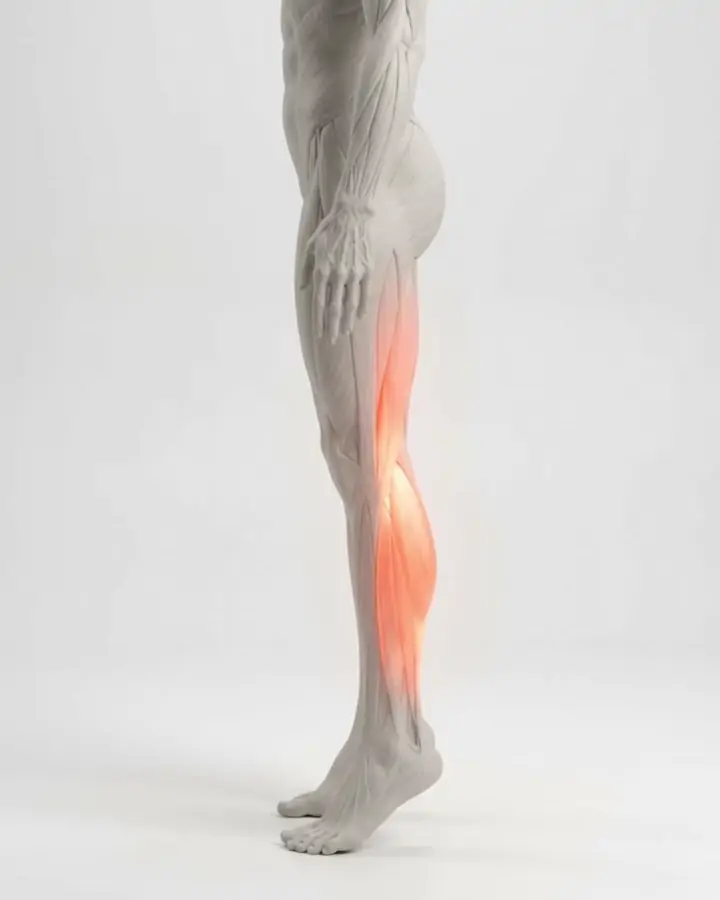
Double-leg heel raises
Stand on both feet, rise straight up over the big toes, lower slowly over three seconds. Both feet share the load. If this hurts the heel, try it in cushioned shoes or on a soft surface first.
Evidence: Early. No trial has tested calf raises for fat pad syndrome. Borrowed from the plantar fasciitis loading literature as a way to improve calf capacity and reduce heel impact.
Heel pain above 5/10 during the exercise or worse the next morning
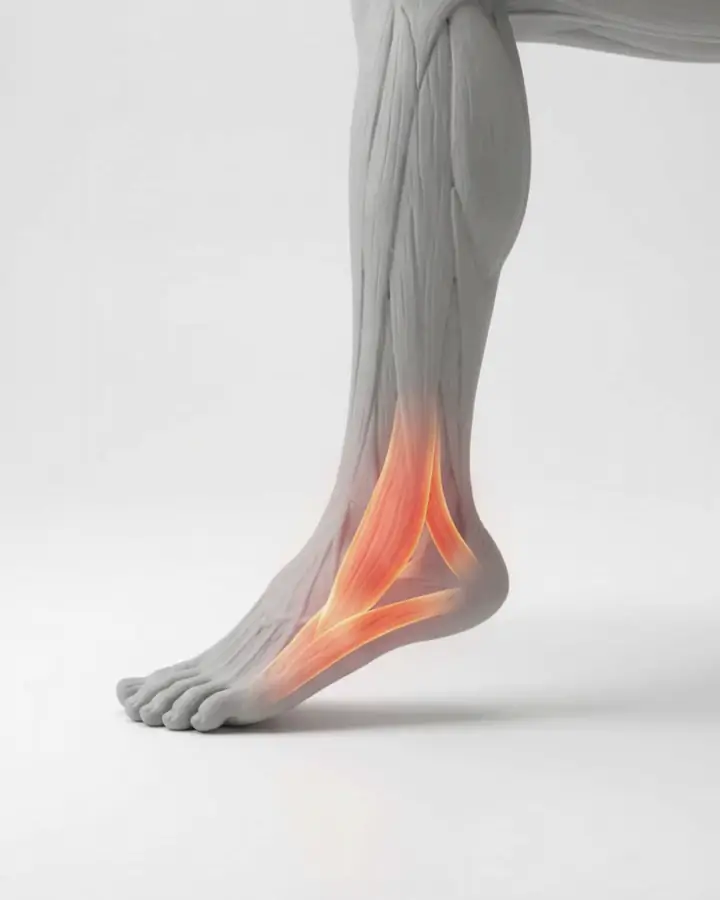
Short foot exercise (seated)
Sit with feet flat on the floor. Without curling the toes, try to pull the ball of the foot toward the heel, lifting the arch. The toes stay flat on the ground. Hold for 5 seconds.
Evidence: Early. Tested for arch support in flat feet, not for fat pad syndrome. A reasonable way to build intrinsic foot muscle control.
Heel pain during the hold
What about injections or surgery?
When external cushioning is not enough, some clinicians discuss injectable fillers or autologous fat grafting, where fat is harvested from another part of your body and injected under the heel bone. A long-term follow-up study (mean 9 years) found that heel fat grafting was associated with durable functional improvement, though the study was small.
These are specialised procedures and not first-line options. They carry their own risks and are not widely available. This page does not recommend for or against them. If external padding, footwear changes, and activity modification have not helped after several months, a foot and ankle specialist can discuss whether injection or grafting is appropriate.
Corticosteroid injections are sometimes used for heel pain, but for fat pad syndrome they can be counterproductive: cortisone can break down fat tissue further and worsen the atrophy.
How is heel fat pad syndrome diagnosed?
A clinician can often suspect fat pad atrophy from the history and a physical exam. The pain pattern (deep central heel, worse barefoot on hard surfaces, does not warm up) combined with a thin, palpable calcaneus points toward the diagnosis.
Ultrasound can measure the fat pad thickness. A pad under 1 centimetre is generally considered atrophied. MRI can show changes in the internal structure of the pad, such as septal damage, fibrosis, or fluid. The 2022 scoping review noted that imaging criteria are not standardised and diagnosis is often clinical.
Fat pad syndrome is partly a diagnosis of exclusion. If plantar fasciitis has been treated appropriately and pain persists, and the clinical features match, the diagnosis should be reconsidered. Having both conditions at the same time is also possible.
Questions people ask
What does heel fat pad syndrome feel like?
A deep, bruise-like ache in the centre of the heel, as though you are walking directly on the bone. It is worst on hard surfaces or barefoot and does not usually improve with a few minutes of walking the way plantar fasciitis does. Pressing the centre of the heel may feel like the bone is right under your finger.
Is heel fat pad syndrome the same as plantar fasciitis?
No. Plantar fasciitis is inflammation or degeneration of the plantar fascia, causing sharp inner-heel pain worst on the first step. Fat pad syndrome is thinning of the cushion under the heel bone, causing a deep central ache on hard surfaces. They can coexist, found together in 9.2% of 250 heel-pain patients in one study, but the treatments differ.
Can heel fat pad grow back?
No. Once the heel fat pad has thinned, it does not regenerate with exercise or rest. The management strategy is external: cushioned heel cups, shoes with thick soles, and avoiding hard surfaces barefoot. In severe cases, fat grafting is an option a specialist can discuss.
What shoes are best for heel fat pad syndrome?
Shoes with thick, cushioned soles and built-in heel padding. Avoid thin-soled, flat shoes and going barefoot on hard floors. Viscoelastic heel cups placed inside the shoe add another layer of cushioning. No RCT has tested specific shoe types for fat pad syndrome, but the principle of replacing lost cushioning is widely accepted.
Do cortisone injections help heel fat pad syndrome?
Cortisone injections are generally not recommended for heel fat pad syndrome. Corticosteroids can break down fat tissue and may worsen the atrophy that is causing the problem. If injections are being discussed, this is a point to raise with your clinician.
How is heel fat pad syndrome diagnosed?
A clinician can suspect it from the pain pattern and a physical exam. Ultrasound measures the fat pad thickness, and a pad under 1 centimetre is generally considered atrophied. MRI can show internal damage. Imaging criteria are not standardised, and it is partly a diagnosis of exclusion when plantar fasciitis treatment has not helped.
See a clinician first if
- heel pain is getting worse despite cushioning and footwear changes
- pain is present at rest or wakes you at night, which may point to a stress fracture, nerve entrapment, or another cause rather than fat pad atrophy alone
- you feel burning, tingling, or numbness in the heel or sole
- you have had repeated corticosteroid injections into the heel and pain is worsening
- both heels are affected and you have prolonged morning stiffness lasting more than 30 minutes
- you cannot bear weight on the foot or are limping
- the heel is red, warm, or swollen
Where an exercise plan fits in
Walkito builds daily sessions around calf raises, foot-muscle work, and stretching. These exercises are designed for plantar fasciitis and foot strength. They may help a foot with fat pad atrophy manage load better, but they are not tested for this condition specifically, and they will not rebuild a thinned fat pad. If a clinician has confirmed fat pad syndrome, an exercise plan like Walkito's is a reasonable complement to cushioning and footwear, not a replacement for it.
Sessions are 3, 5 or 10 minutes. Every 14 days, a test checks calf endurance and balance. Walkito does not diagnose. If you are unsure whether your heel pain is fat pad atrophy or plantar fasciitis, see a clinician first.
Updated
Walkito is an exercise program. It does not diagnose and does not treat. If pain is sharp, getting worse, or stopping you sleeping, see a clinician.
Start with 3 minutes a day.