 WalkitoGet the app
Heel spur exercises: stretches and strengthening for the pain around a spur
Exercise does not dissolve a heel spur. The spur is bone, and bone does not shrink from stretching. But the pain people feel when they have a heel spur almost always comes from the plantar fascia and calf around it, not from the bone itself. The exercises below target those soft tissues. They are the same ones the 2023 heel pain guideline recommends for plantar fasciitis.
If you want to understand the difference between a heel spur and plantar fasciitis first, see plantar fasciitis vs heel spur. This page is the practical routine: which exercises, how many, how to progress, and when to stop.
Walkito turns these exercises into a short daily plan that adjusts to how your feet felt this morning. Get Walkito on the App Store →
Why do exercises help a heel spur?
The heel spur is a bony growth on the underside of the heel bone. In a study of 530 people aged 50 and over with foot pain, a heel spur on its own was rare (6% of feet), and heel pain was linked to a spur together with a thickened plantar fascia, the band of tissue under the foot (Menz and colleagues, 2019). The pain comes from the soft tissue, and that is what exercise can reach.
Stretching the plantar fascia and the calf reduces the tension on the heel attachment. Strengthening the calf builds the capacity of the chain that absorbs load every time the heel strikes the ground. Together, they lower the daily stress on the tissue around the spur.
No exercise program will make a spur disappear on X-ray. But most people with a heel spur do not need the spur to disappear. They need the pain to settle, and that comes from the fascia and the calf getting stronger and more flexible.
The stretches
Stretching is the starting point. The 2023 guideline grades plantar fascia and calf stretching A, its top grade. A systematic review and meta-analysis of stretching for plantar fasciitis found that both calf stretching and plantar fascia stretching reduced pain compared with no stretching (Siriphorn and Eksakulkla, 2020). Start with these three.
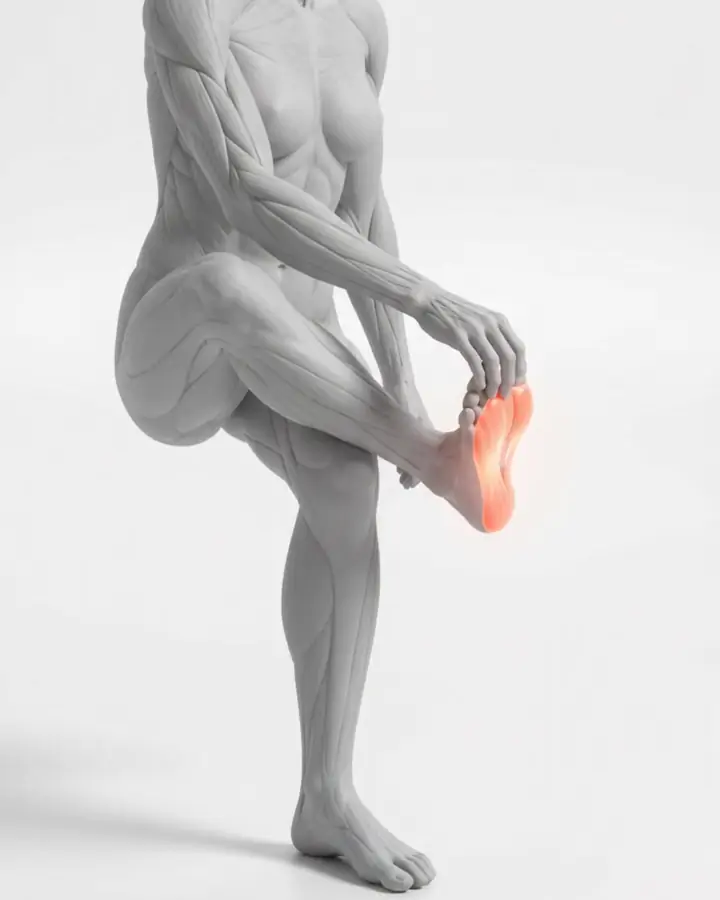
Plantar fascia stretch
Sit and cross one ankle over the other knee. Pull the toes back gently until you feel a stretch along the arch. Hold, then release. Do this before your first step each morning and after long periods of sitting.
Evidence: Strong. Guideline grade A. A 2003 trial of 101 people found this stretch more effective than calf stretching alone at 8 weeks.
Pain reaches 6/10
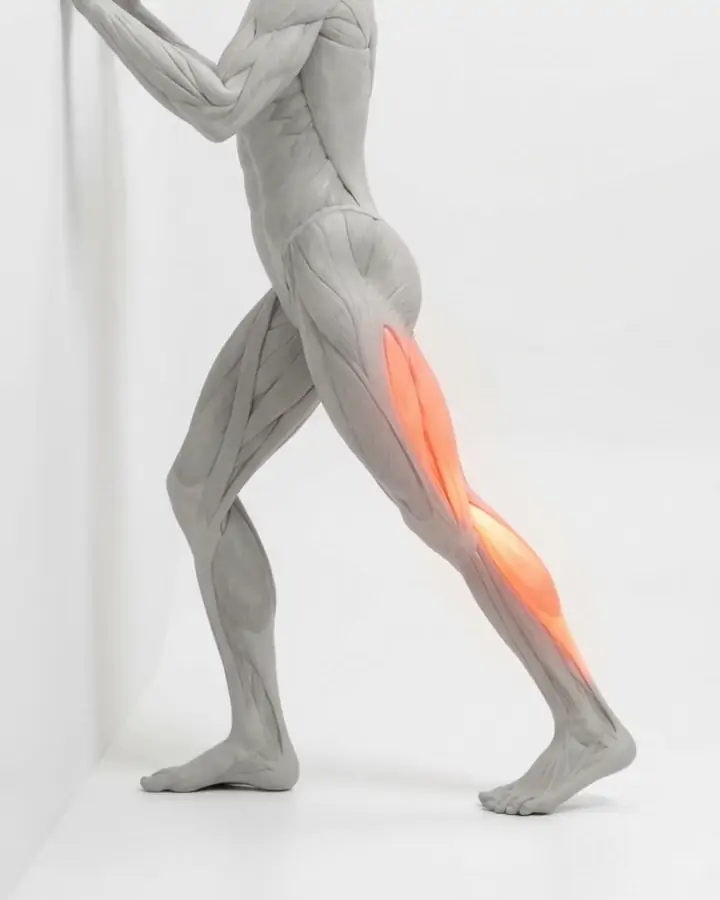
Calf stretch (straight knee)
Hands on a wall. Back leg straight, heel on the floor, hips forward. Hold until you feel the stretch in the upper calf. The gastrocnemius, the bigger outer calf muscle, only stretches with the knee straight.
Evidence: Strong. Guideline grade A. A tight gastrocnemius was the strongest risk factor for plantar fasciitis in a 2003 case-control study.
Pain reaches 6/10
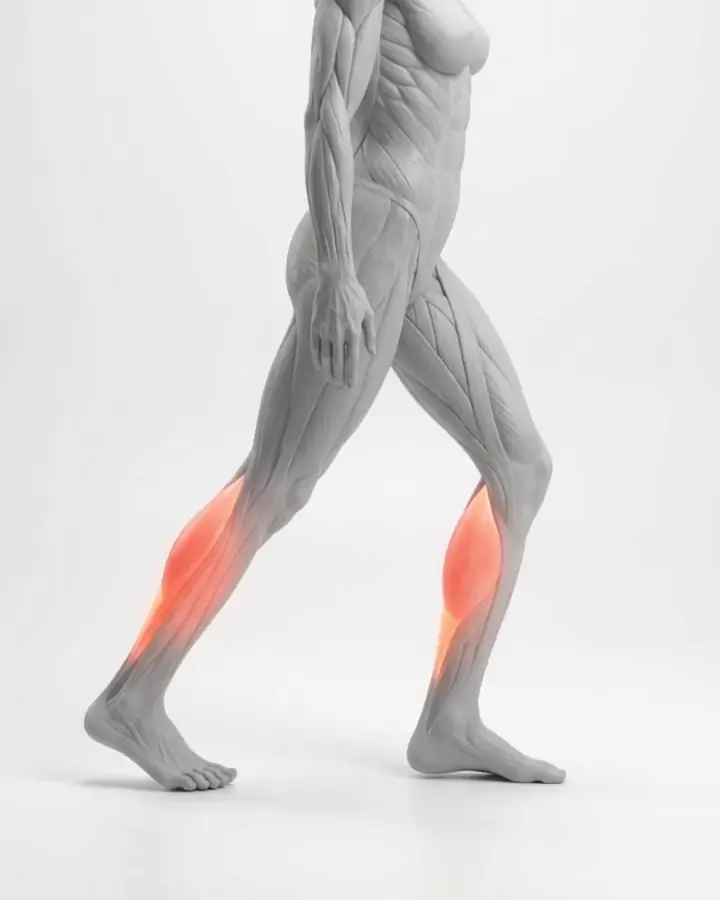
Soleus stretch (bent knee)
Same wall position as the calf stretch, then bend the back knee until you feel the stretch shift lower, near the heel. The soleus sits underneath the gastrocnemius and attaches closer to the heel.
Evidence: Strong. Guideline grade A. Targets the soleus, the deeper calf muscle that only releases with the knee bent.
Pain reaches 6/10
The strengthening exercises
Stretching alone is often enough in the first few weeks. Once the morning pain starts settling, adding calf strengthening builds the capacity the heel chain needs. The guideline grades strength training B, its second-highest grade. In the only trial built to test heel raises for plantar fasciitis, 48 people were split into a loaded heel-raise group and a stretching-only group. The heel-raise group scored 29 points better on the Foot Function Index at three months (Rathleff and colleagues, 2015).
Start at the easiest level and move up only when it feels easy for two sessions in a row. The progression below runs from seated work to the loaded towel raise from the trial.
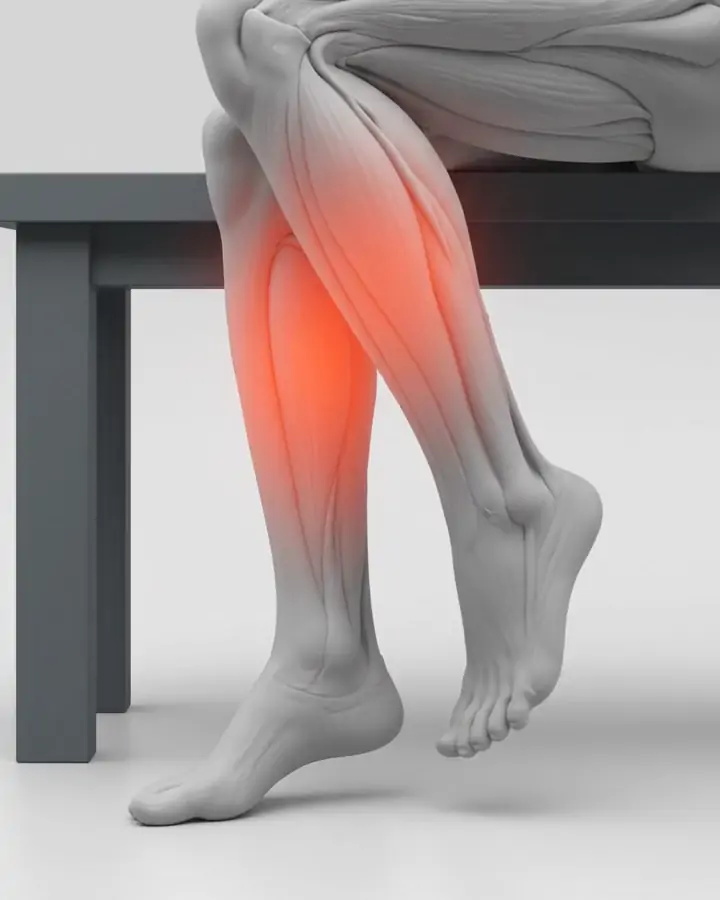
Seated heel raises
Sit with your feet flat on the floor. Press up through the balls of both feet. Hands on the knees add gentle resistance. This is the lowest-load way to start working the calf.
Evidence: Moderate. Guideline grade B covers strength work generally. This low-load entry step was not tested on its own.
Pain reaches 6/10
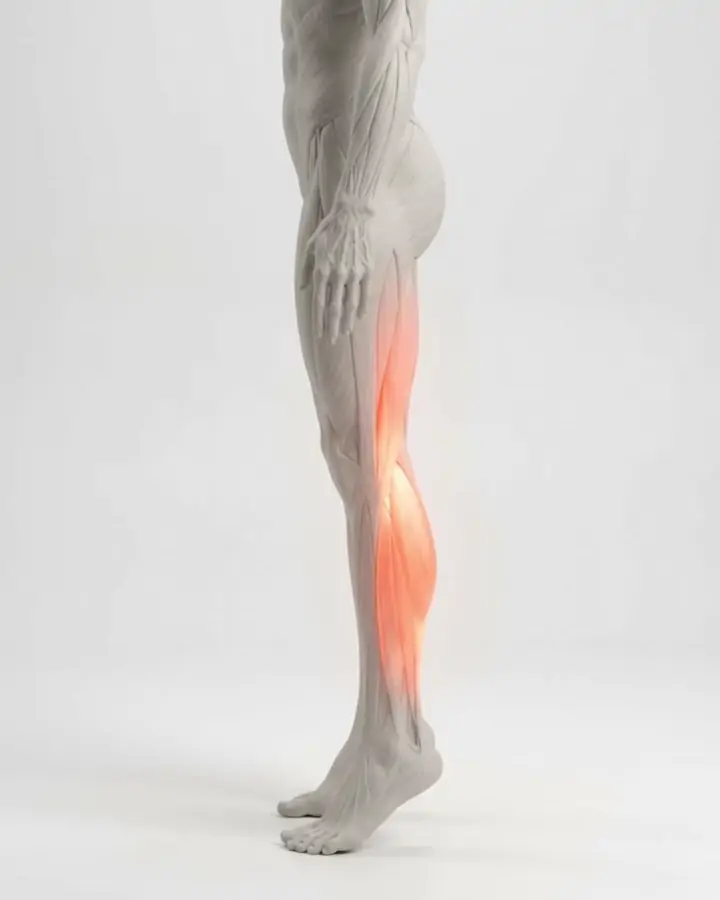
Heel raises on both feet
Stand on both feet, rise straight up over the big toes, then lower slowly. Both feet share the load. Hold a wall or rail for balance.
Evidence: Moderate. Guideline grade B. A stepping stone to single-leg loaded work.
Pain reaches 6/10
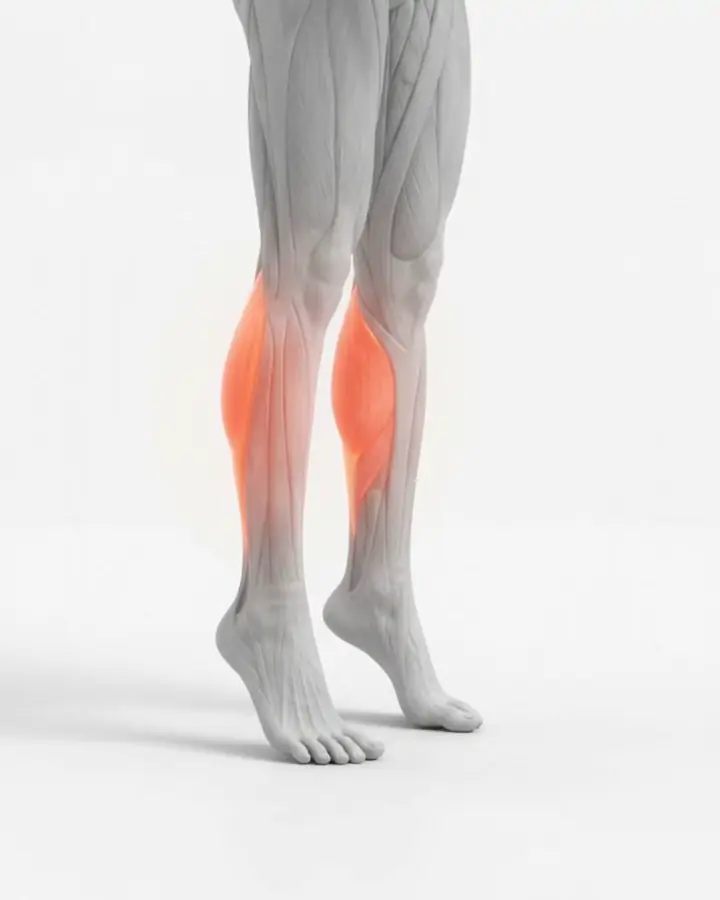
Heel raise hold (isometric)
Rise onto your toes on both feet, then hold still at the top. Do not sink back down. Holding loads the tendon without the bounce of a full rep.
Evidence: Moderate. Guideline grade B. Isometric hold at end-range. Not tested in an isolated plantar fasciitis trial.
Pain reaches 6/10
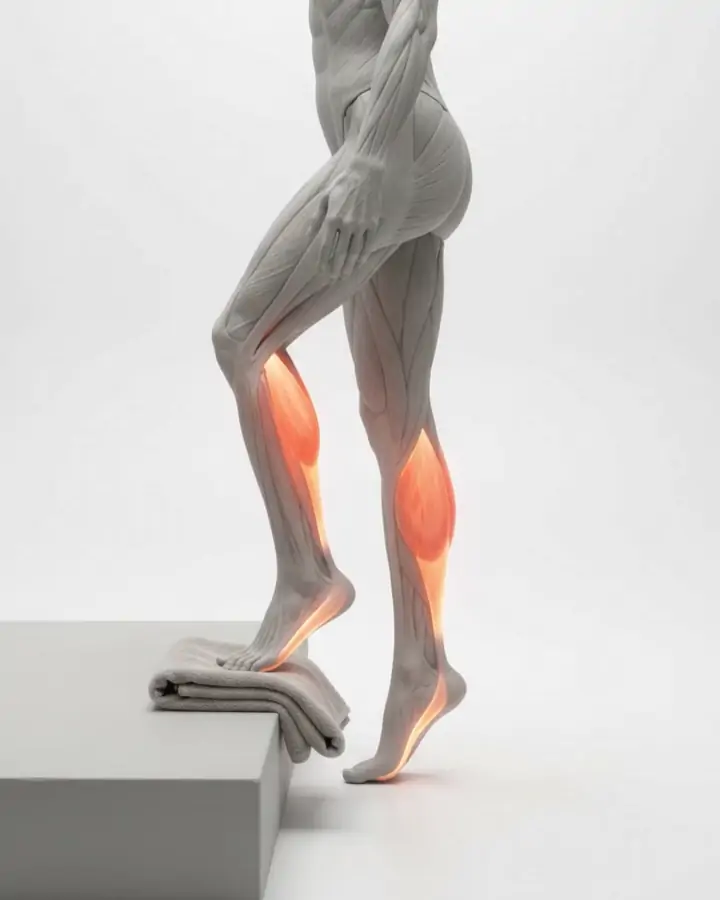
Heel raises with a towel (single-leg)
Stand on one foot on the edge of a step, rolled towel under all five toes. Three seconds up, two-second hold, three seconds down. The towel engages the windlass mechanism, loading the plantar fascia along with the calf. Add weight with a backpack when the last rep stops being hard.
Evidence: Strong. The exercise from the Rathleff 2015 RCT. Guideline grade B.
Pain reaches 6/10
How to progress through the exercises
Progress by feel, not by calendar. The rule is: if the current level felt easy for two sessions in a row, move up one step. If morning pain is worse after a session, stay at the current level or step back.
| Level | Exercise | When to move up |
|---|---|---|
| 1 | Plantar fascia stretch + calf stretches only | Morning pain is settling, you want to add strength work |
| 2 | Seated heel raises (3 x 10) | Easy for two sessions in a row |
| 3 | Double-leg heel raises (3 x 10) | Easy for two sessions in a row |
| 4 | Heel raise hold (3 x 20 seconds) | Easy for two sessions in a row |
| 5 | Towel heel raise, single-leg (3 x 12) | Progress load with a backpack once bodyweight is easy |
Add the plantar fascia stretch and calf stretches at every level. Stretching is not something you drop when you start strengthening. The guideline grades both independently.
For more detail on the towel heel raise protocol and the research behind it, see calf raises for plantar fasciitis.
Optional supporting exercises
The stretches and heel raises above are the core. The following exercises are not specific to heel spurs, but they target the foot and ankle muscles that support the arch and absorb shock. The evidence behind each is thinner.
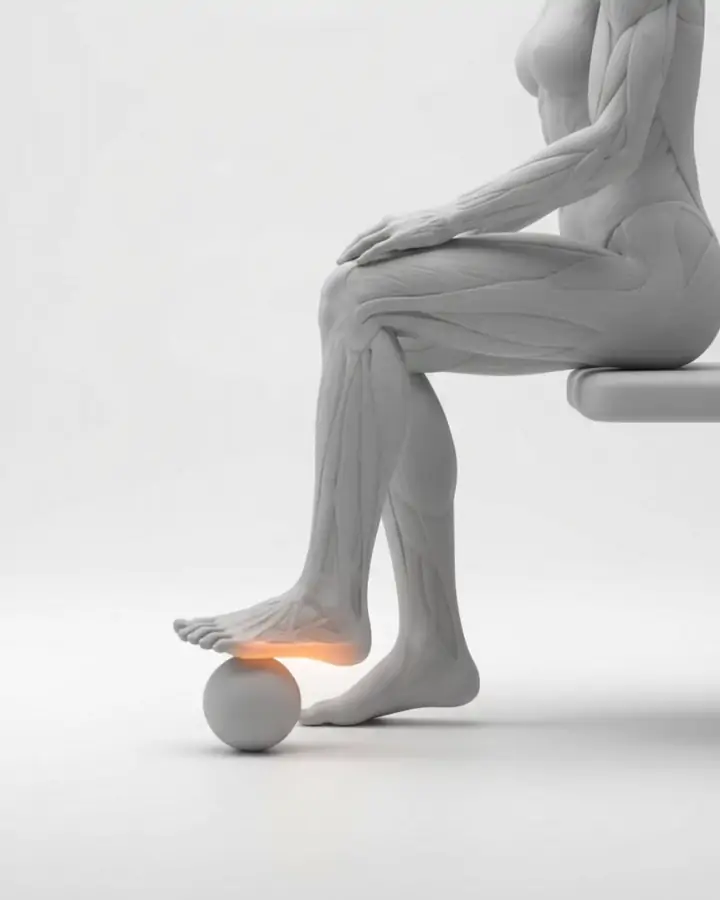
Foot roll
Sit and roll the sole of your foot slowly over a massage ball or frozen water bottle. Keep the pressure firm but not enough to make you wince. Rolling after a long day on your feet can settle the tissue.
Evidence: Early. Not tested in the studies on this page. A comfort measure between sessions.
Pain reaches 6/10
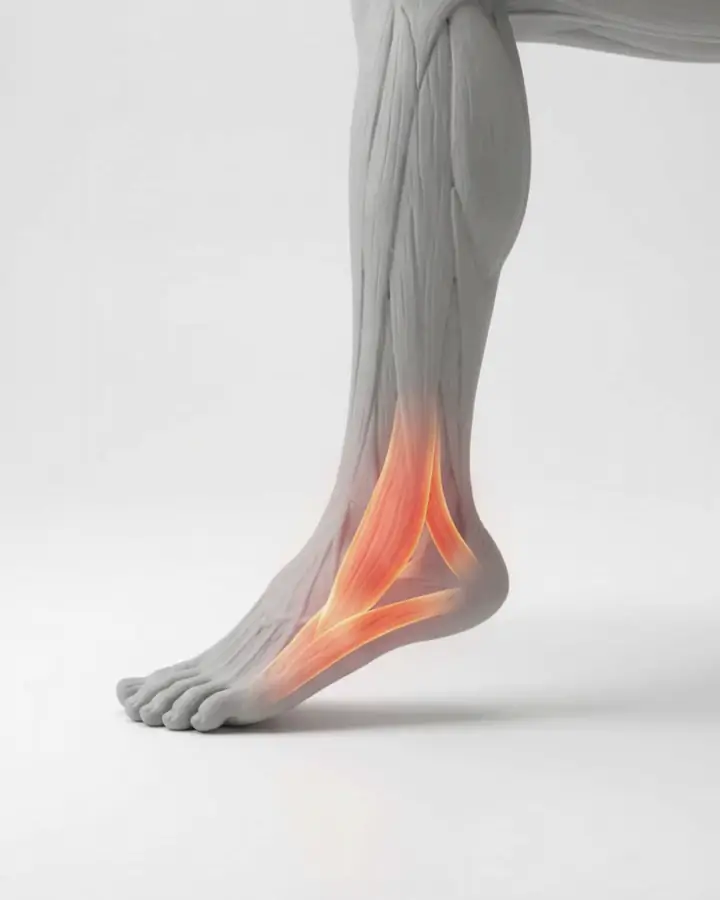
Short foot, seated
Sit with your foot flat on the floor. Pull the ball of the foot toward the heel so the arch lifts. Do not curl the toes. This trains the small muscle inside the arch.
Evidence: Early. A 2024 review found short-foot training changed arch shape but not pain. Part of a program that improved arch measures in a 2023 trial.
Pain reaches 6/10
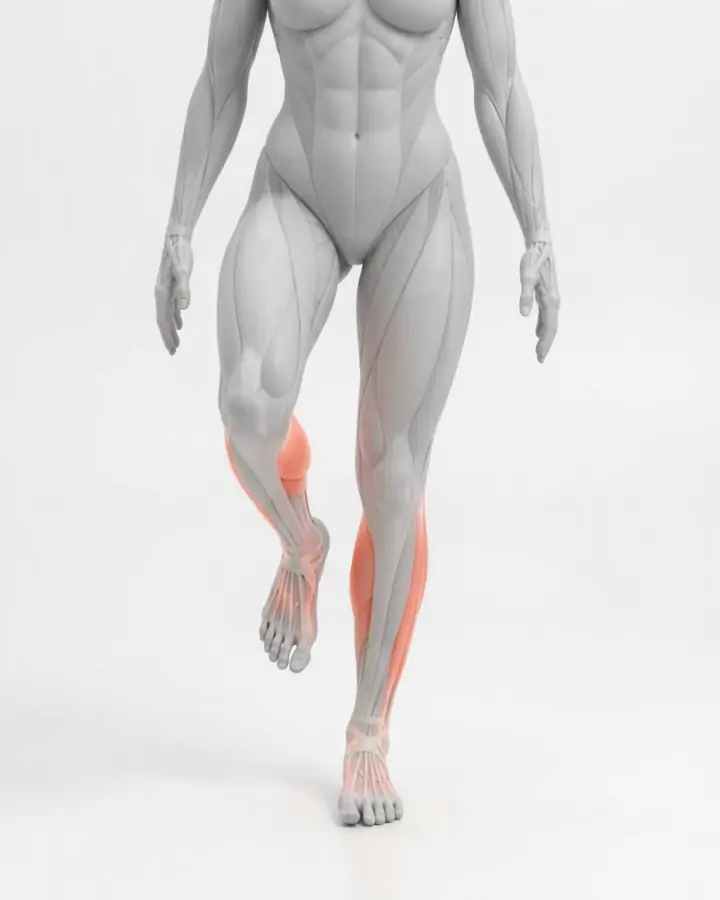
Single-leg hold
Stand on one foot and look at one fixed spot. Let the foot wobble. The wobble is the foot doing the balancing. Stand near a wall for safety.
Evidence: Early. No heel-spur-specific study. General balance work for the foot and ankle.
Pain reaches 6/10
What should the exercises feel like, and when should you stop?
Stretching should feel like a pull, not a stab. A calf stretch that produces a comfortable tension in the upper or lower calf is on target. A plantar fascia stretch that pulls gently along the arch is on target. If stretching reproduces the sharp pain you feel on first steps, ease off.
Heel raises should feel like calf work. The towel version will also produce a pull under the arch, which is the fascia loading. That pull is expected and is the point of the towel.
Stop for the day if pain reaches 6/10 or more during any exercise, or if your first steps the next morning are clearly worse than usual. That stop-and-step-down rule is what the app uses. Mild soreness that settles within a day is normal, especially in the first two weeks. Pain that stays elevated for days or gets worse week over week is a reason to step back one level or see a clinician.
How long before heel spur pain improves with exercise?
There is no trial measuring exercise outcomes specifically for people with heel spurs. The timelines below come from plantar fasciitis studies, which is the condition producing the pain around the spur in most cases.
A review of the clinical evidence reports that about 90% of people with plantar fasciitis improve with non-surgical care such as stretching and shoe inserts, often within several months (Latt and colleagues, 2020). In the Rathleff 2015 trial, the loaded heel-raise group was significantly ahead of the stretching-only group by three months.
No exercise program can promise a timeline for any one person. What you can measure is whether things are changing. Morning pain on a 0 to 10 scale, taken before your first step, is the clearest day-to-day signal. Calf endurance, measured by how many single-leg heel raises you can do, tracks strength over weeks. Both are more useful than guessing.
Can you get rid of a heel spur naturally?
Exercise, stretching and dietary changes do not dissolve a heel spur. The spur is calcified bone. It stays on the X-ray whether you stretch or not.
But "getting rid of the spur" is rarely the right goal. In the 2019 study, the spur almost always came with a thickened plantar fascia, and the soft tissue is the part exercise can change. The pain comes from the soft tissue. The exercises on this page target the soft tissue. If the pain settles, the spur is not a problem that needs solving.
If someone has promised you a supplement, cream or device that dissolves heel spurs, be skeptical. No published evidence supports that claim. The guideline-recommended approach is stretching, calf strengthening and load management.
Questions people ask
What exercises help heel spur pain?
The exercises that help heel spur pain are the same ones the 2023 heel pain guideline recommends for plantar fasciitis: plantar fascia stretching (guideline grade A), calf stretching (grade A) and gradual calf strengthening through heel raises (grade B). They target the plantar fascia and calf muscles around the spur, which are usually what produces the pain.
Do heel spur exercises dissolve the spur?
No. A heel spur is calcified bone and exercise does not dissolve it. The exercises address the plantar fascia and calf, the soft tissues around the spur that are almost always the source of the pain. If the pain settles with exercise, the spur on the X-ray is not a problem that needs solving.
How often should I do heel spur stretches?
The plantar fascia stretch works best done every morning before standing and after long periods of sitting. Calf stretches fit into most sessions. In a trial of 101 people with chronic heel pain, the group doing the plantar fascia stretch reported better outcomes at 8 weeks than the group doing calf stretching alone (DiGiovanni and colleagues, 2003).
How long does it take for heel spur pain to go away?
Most timelines come from plantar fasciitis studies, since fascia irritation is usually what hurts. A review reports that about 90% of people with plantar fasciitis improve with non-surgical care, often within several months (Latt 2020). In a 48-person trial, loaded heel raises showed benefit over stretching alone by three months (Rathleff 2015). No program can promise a timeline for any one person.
Should I stop exercising if I have a heel spur?
Not necessarily. The guideline recommends exercise as part of the approach, not rest alone. Stop a specific exercise for the day if pain reaches 6 out of 10 or more, or if the next morning is clearly worse. Step back one level rather than stopping entirely. If pain gets worse week over week despite adjusting, see a clinician.
Is walking good for heel spurs?
Walking itself is not the problem. Walking in supportive shoes at a comfortable pace is usually fine and better than complete rest. The pain comes from the plantar fascia and calf under the spur, and moderate walking keeps the calf pump active. If walking makes your morning pain worse the next day, shorten the distance and build it back gradually.
See a clinician first if
- the pain followed an injury or a fall
- you cannot put weight on the foot, or you are limping
- squeezing the sides of the heel reproduces the pain, which can point toward a stress fracture
- it comes with numbness, tingling or burning
- the heel is red, warm or swollen, or you have a fever
- both heels hurt and morning stiffness lasts more than 30 minutes, especially if other joints are involved
- pain keeps you awake at night or is present at rest
- it has not improved after several weeks of daily stretching and calf work
- you have diabetes, reduced feeling in your feet or poor circulation
Doing it as a plan
You do not have to track the levels, the sets or when to progress. Walkito builds a plan one week at a time around one goal. For heel pain, the first goal is morning pain at or under 1 out of 10 for 14 days in a row. Stretching starts on day one. The calf chain, seated raises through to the loaded towel raise, moves at your pace.
You pick 3, 5 or 7 days a week and sessions of 3, 5 or 10 minutes. Every 14 days (then every 28 once the morning goal is met), a short test checks calf endurance, arch hold and balance. Walkito is an exercise program. It does not diagnose and is not a substitute for a clinician.
Updated
Walkito is an exercise program. It does not diagnose and does not treat. If pain is sharp, getting worse, or stopping you sleeping, see a clinician.
Start with 3 minutes a day.