 WalkitoGet the app
Top of foot pain: what causes it and when to see a clinician
Pain on the top of the foot is less common than heel or arch pain, but it can make every step uncomfortable, especially in shoes. The most common cause is extensor tendonitis, irritation of the tendons that lift the toes, often from tight laces or a sudden jump in activity. Other causes include stress fractures, bone spurs, gout, and nerve compression. Most respond to simple changes, but a few need imaging or a clinician visit to sort out.
The top of the foot is called the dorsum. Several tendons, nerves, and small bones sit just below the surface there, which makes the area vulnerable to pressure from shoes and to overuse. This page covers the most common causes, what you can do at home, what the evidence says about exercise for this area, and where the honest gaps are.
Walkito turns these exercises into a short daily plan that adjusts to how your feet felt this morning. Get Walkito on the App Store →
What causes pain on the top of the foot?
Extensor tendonitis is the most common cause. The extensor tendons run along the top of the foot from the shin to the toes. They lift the toes and the foot during walking. When they become irritated, you feel an ache along the top of the foot that gets worse with activity and often hurts when you pull the toes upward against resistance. The usual triggers are tight shoe laces pressing directly on the tendons, a sudden increase in walking or running distance, or shoes with a rigid tongue.
Metatarsal stress fracture is a small crack in one of the long bones of the foot, usually the second or third metatarsal. The pain is more localized than tendonitis, sits over one specific spot, and tends to get worse through the day. Swelling on the top of the foot is common. Stress fractures can take two to three weeks to show on a plain X-ray, so early imaging may need an MRI. This one needs rest, not exercise.
Dorsal bone spur (also called a metatarsal exostosis) is a bony bump that forms on top of the midfoot joints, usually where the metatarsals meet the cuneiform bones. It develops gradually from years of compression at those joints. The spur itself may not hurt, but it can press against the shoe tongue or irritate a nerve running over it.
Gout can cause sudden, severe pain on the top of the foot, most often at the big toe joint. The joint becomes red, swollen, hot, and extremely tender. Gout is caused by uric acid crystal deposits and needs medical management. Exercise does not help an active gout flare.
Nerve irritation can come from the deep peroneal nerve or superficial peroneal nerve being compressed by tight shoes, swelling, or a bone spur. The pain tends to be burning or tingling rather than a deep ache, and may radiate into the toes or up the ankle.
Midfoot arthritis involves the small joints on top of the foot, usually from wear and tear or a previous injury. The pain is stiff and achy, worse after long periods of standing or walking, and may come with visible thickening over the joints.
How do you tell these causes apart?
Location and pattern are the first clues. Extensor tendonitis produces a broad ache along the tendons that worsens when you pull the toes up. A stress fracture hurts in one specific spot and gets worse through the day. Gout comes on suddenly, usually at the big toe joint, with redness and heat. Nerve pain tends to be burning or tingling, not a deep ache.
A clinician can often tell the difference with a physical exam. Resisted toe extension (pulling the toes up against pressure) reproduces tendonitis pain. Point tenderness over one bone with localized swelling suggests a stress fracture. If a stress fracture is suspected, imaging is important because continuing to load a fractured bone can make it worse.
If the pain is only present in shoes and goes away barefoot, shoe pressure is the most likely factor. If it persists at rest or wakes you at night, something beyond simple tendonitis is worth investigating.
What helps extensor tendonitis?
The fastest first step is usually a lacing change. Skip the eyelet directly over the sore spot. Many athletic shoes have enough eyelets that you can thread the lace around the tender area without losing support elsewhere. This removes the direct pressure that started the problem.
Shoes with a padded or flexible tongue compress the tendons less. If you wear boots, cleats, or dress shoes with a rigid upper, the pressure from the top of the shoe is often the whole story.
Temporarily reducing the activity that triggered the pain helps. If the pain started when you increased your walking or running distance, back off to the previous level for a week or two, then build back up gradually.
Ice over the sore tendons for 10 to 15 minutes after activity can help settle the irritation in the early days. Anti-inflammatory medication is a short-term option if the pain is interfering with daily life, but it does not speed up the underlying recovery.
Does exercise help top-of-foot pain?
No randomized trial has tested exercise specifically for dorsal foot pain or extensor tendonitis. The evidence here is honest: we do not know whether exercise speeds recovery from extensor tendonitis compared with lacing changes and rest alone.
What exercise can address are contributing factors. The tibialis anterior, the muscle on the front of the shin that lifts the foot, is also an extensor. When it is weak relative to the calf, the smaller extensor tendons on top of the foot take more load during walking. Strengthening the tibialis anterior with toe raises (lifting the front of the foot while standing against a wall) is one way to reduce that imbalance. See shin splints exercises for more on the tibialis anterior.
Calf stretching is relevant if ankle dorsiflexion is limited. When the ankle cannot bend enough, the foot compensates in ways that can increase stress on the dorsal structures. A tight calf is also a shared risk factor for plantar fasciitis and forefoot overload.
For dorsal bone spurs and midfoot arthritis, exercise does not change the bony anatomy. Ankle mobility work can help maintain range, and strengthening can reduce symptoms, but the spur or joint degeneration stays. For stress fractures, exercise is the wrong approach until the bone has recovered.
Exercises that address contributing factors
These exercises do not target the dorsal foot directly. They address calf tightness and shin weakness, which are contributing factors for extensor tendon overload. If your top-of-foot pain is from a stress fracture, gout, or an active nerve problem, skip these and see a clinician first.
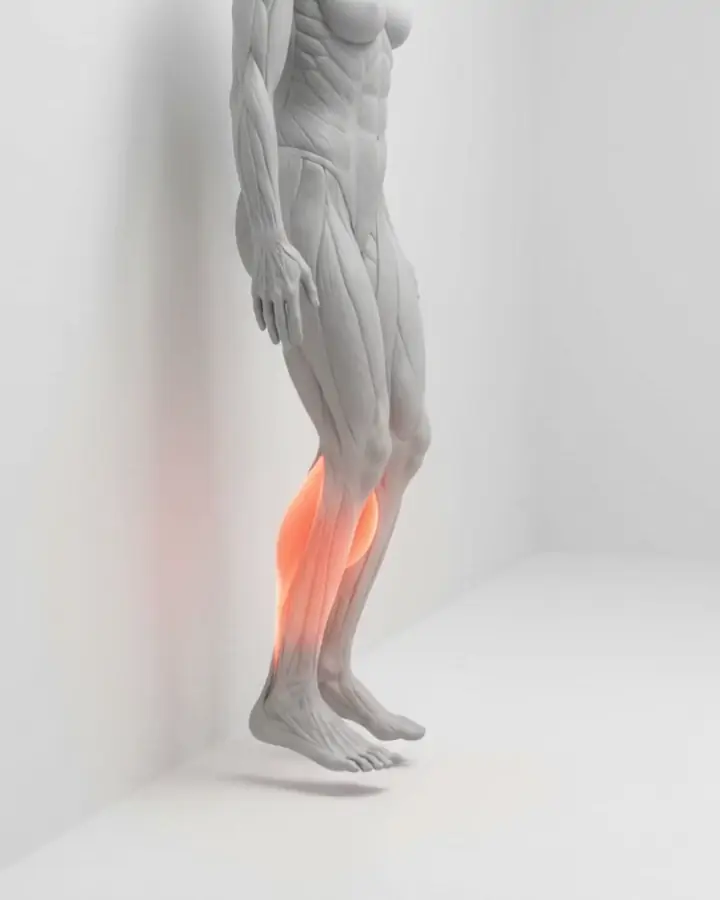
Tibialis raise (toe raises)
Stand with your back against a wall, feet about a foot length ahead of you. Lift the front of both feet off the ground, pulling the toes toward the shins. Lower slowly. This strengthens the tibialis anterior, the main muscle that lifts the foot.
Evidence: Early. No trial for extensor tendonitis. The exercise strengthens the tibialis anterior, which shares dorsiflexion load with the extensor tendons.
Pain on top of the foot that is above 4/10
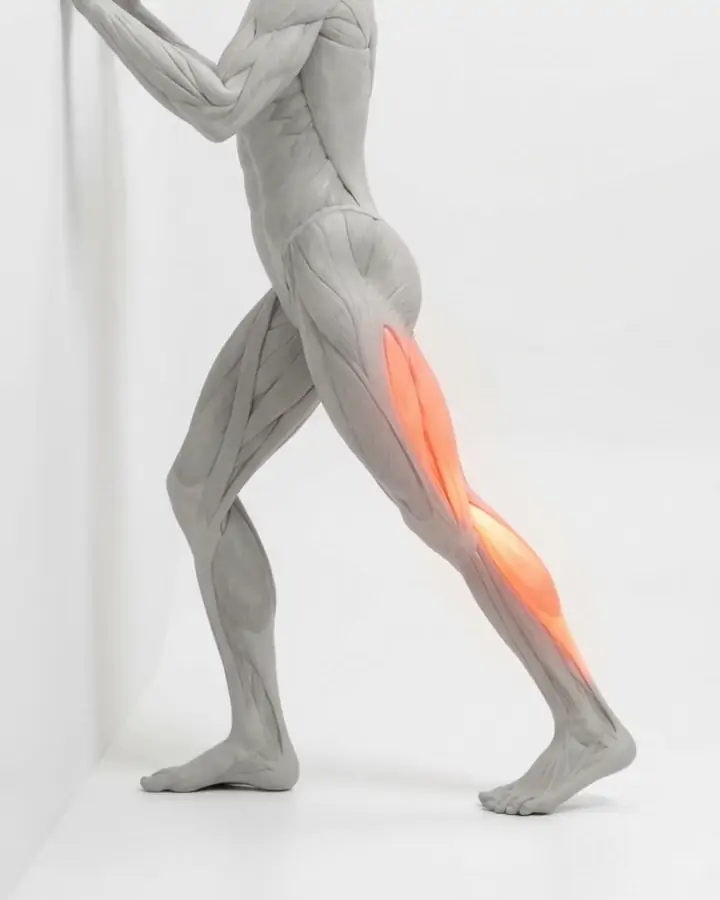
Calf stretch (straight knee)
Hands on a wall. Back leg straight, heel down, hips forward. Hold until you feel the stretch in the upper calf. A tight calf limits ankle dorsiflexion, which can shift stress to the top of the foot.
Evidence: Strong. Calf stretching has guideline-grade A support for related lower-leg conditions. Not tested for extensor tendonitis specifically.
Pain in the Achilles tendon
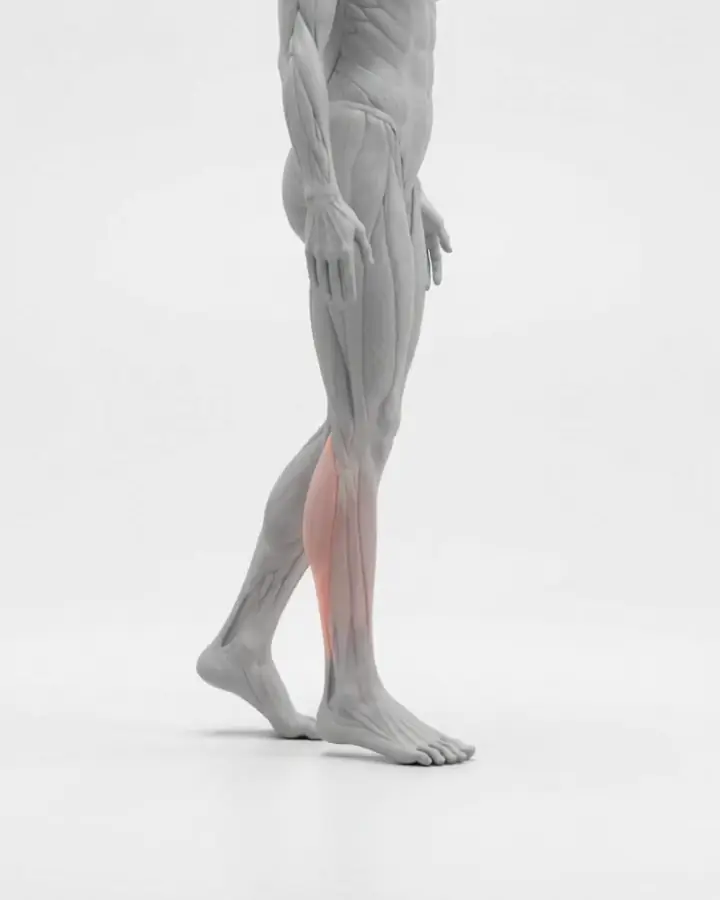
Ankle rocks
Stand facing a wall with one foot forward, hands on the wall. Drive the knee forward over the toes while keeping the heel on the floor. Rock back and repeat. This gently improves dorsiflexion range.
Evidence: Early. Ankle mobility work is part of general lower-leg rehabilitation. No trial for dorsal foot pain specifically.
Pain on the top of the foot during the rock
When is top-of-foot pain a stress fracture?
A metatarsal stress fracture is the cause you most need to rule out, because continuing to load a fractured bone can turn a small crack into a full break.
Stress fractures usually develop gradually from repetitive impact. They are more common in runners, military recruits, and people who have suddenly increased their activity. The pain is localized to one spot, gets worse with weight-bearing activity, and may hurt at night. Swelling on the top of the foot over the sore bone is common.
A plain X-ray may not show a stress fracture in the first two to three weeks. If a clinician suspects one, an MRI or bone scan can confirm it earlier. The approach is rest and protected weight-bearing, not exercise. Returning to activity too soon risks a complete fracture.
If the pain came on after a jump in training volume, sits in one spot, and gets worse through the day, see a clinician before doing any of the exercises on this page.
What about gout and the top of the foot?
Gout is an inflammatory condition caused by uric acid crystals depositing in a joint. It classically affects the big toe joint (the first metatarsophalangeal joint), but can hit any joint in the foot, including the midfoot.
A gout flare comes on fast, often overnight. The joint becomes intensely painful, red, hot, and swollen. It looks and feels different from tendonitis or a stress fracture. If you have sudden severe pain in a single joint with redness and heat, this is a reason to see a clinician promptly. Blood tests and sometimes joint fluid analysis confirm the diagnosis.
Gout needs medical management. Exercise, shoe changes, and stretching do not help an active flare. Between flares, maintaining foot and ankle mobility is reasonable, but the underlying uric acid problem is managed with medication and dietary changes.
Questions people ask
Why does the top of my foot hurt when I walk?
The most common cause is extensor tendonitis, where the tendons that lift the toes become irritated from tight shoes, shoe laces pressing on the tendons, or a sudden increase in walking distance. Other causes include stress fractures, bone spurs, and nerve compression. If the pain is only in shoes and disappears barefoot, shoe pressure is the most likely factor.
Can tight shoe laces cause top of foot pain?
Yes. The extensor tendons run just below the surface on the top of the foot, and tight laces press directly on them. Skipping the eyelet over the sore spot or switching to shoes with a softer tongue often resolves the pain within a few days. This is one of the most common and most fixable causes of dorsal foot pain.
How do I know if top of foot pain is a stress fracture?
A stress fracture tends to hurt in one specific spot, gets worse through the day and with activity, and may swell on top of the foot. It often follows a sudden increase in training volume. Early stress fractures may not show on an X-ray for two to three weeks. If pain is localized, progressive, and activity-related, see a clinician for imaging instead of continuing to exercise.
Does exercise help top of foot pain?
No trial has tested exercise for dorsal foot pain specifically. Exercise can address contributing factors: tibialis anterior strengthening reduces the load on the smaller extensor tendons, and calf stretching improves ankle mobility. But for stress fractures, gout, or nerve problems, exercise is either ineffective or counterproductive. The cause determines whether exercise makes sense.
What does extensor tendonitis feel like?
Extensor tendonitis feels like a broad ache along the top of the foot, from the ankle toward the toes. It gets worse when you pull the toes upward, during walking or running, or when wearing tight shoes. Unlike a stress fracture, the pain is spread along the tendons rather than focused on one bony point.
Can gout cause pain on top of the foot?
Yes. Gout classically hits the big toe joint, but it can affect the midfoot joints too. A gout flare comes on suddenly, often overnight, with intense pain, redness, heat, and swelling in one joint. It looks different from tendonitis or a stress fracture. It needs medical treatment, not exercise.
Should I see a doctor for top of foot pain?
See a clinician if the pain is localized to one spot and getting worse, if there is redness or heat over the sore area, if the pain persists after a week of rest and shoe changes, if it came on suddenly after an injury, or if there is numbness or tingling. Stress fractures, gout, and nerve problems all benefit from early assessment.
See a clinician first if
- pain is localized to one spot on top of the foot and gets worse through the day, which can suggest a stress fracture
- there is swelling, redness, or warmth over a single joint, which can suggest gout or infection
- the pain came on suddenly after an injury, fall, or twist
- there is numbness, tingling, or burning, which can suggest nerve compression
- the pain does not improve after one to two weeks of rest and shoe changes
- you cannot put weight on the foot or you are limping
- there is a visible lump on the top of the foot that is growing
- you have diabetes, reduced feeling in your feet, or poor circulation
Doing it as a plan
Walkito is built around heel pain and flat feet, not dorsal foot pain specifically. But if extensor tendon overload is part of your picture, the tibialis anterior strengthening (toe raises) and calf stretching in the app address the contributing muscle imbalances. Marking the top of the foot on the pain map during a check-in lets the app track whether the pain is changing alongside your exercises.
You pick 3, 5 or 7 days a week and sessions of 3, 5 or 10 minutes. Every 14 days, a short test checks calf endurance, arch hold, and balance. Walkito does not diagnose dorsal foot pain. If you suspect a stress fracture, gout, or nerve problem, see a clinician before starting any exercise program.
Updated
Walkito is an exercise program. It does not diagnose and does not treat. If pain is sharp, getting worse, or stopping you sleeping, see a clinician.
Start with 3 minutes a day.