
Where does your foot hurt?
Tap the spot that hurts on either picture. You will see the conditions that most often cause pain there, each with a short description and a link to its full guide. This is a guide to common causes, not a diagnosis.
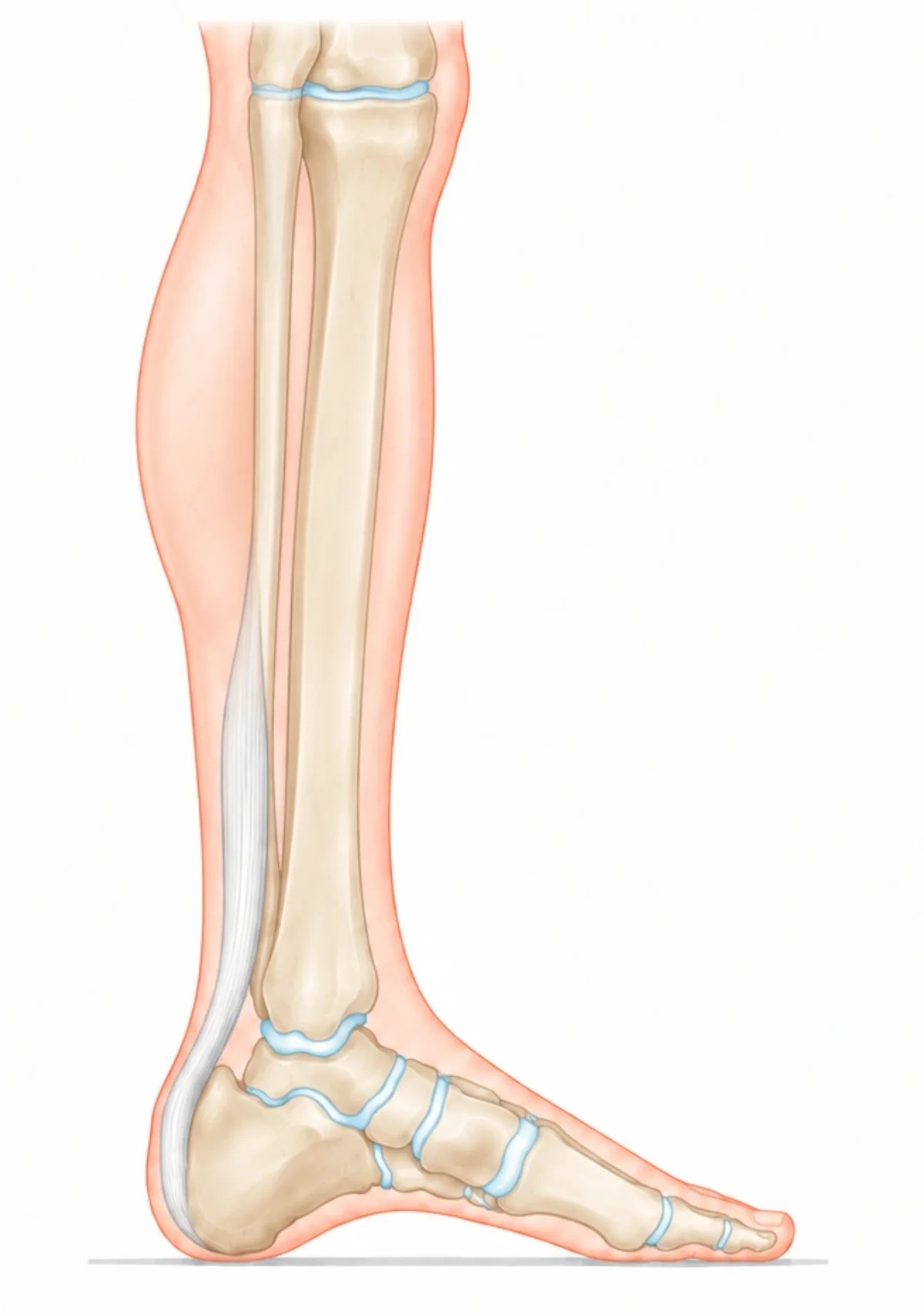
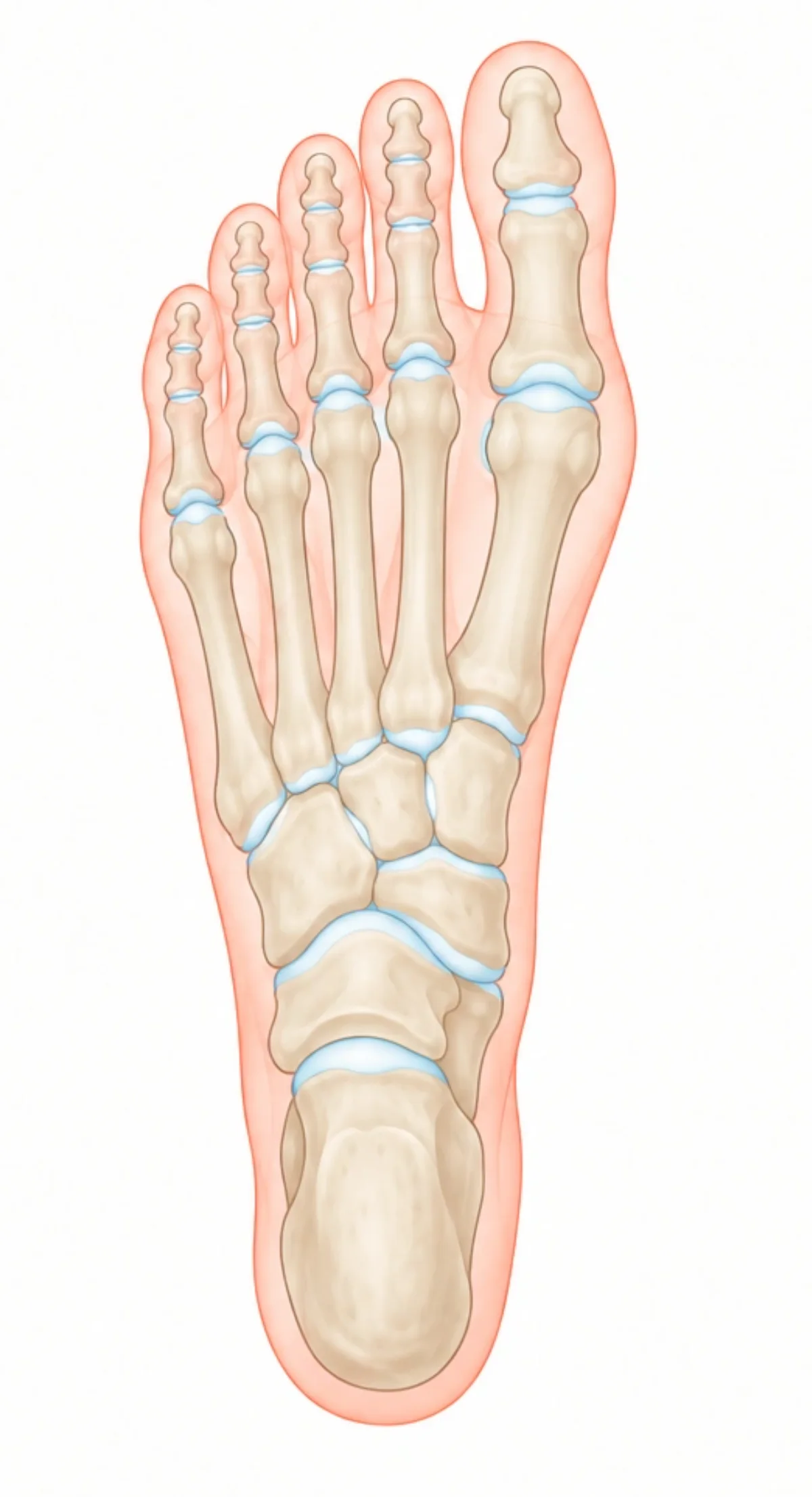
Illustrations: Walkito
Or pick an area:
Pain under the heel
- Plantar fasciitisSharp pain under the heel, worst with the first steps in the morning or after sitting.
- Heel spurA small bony growth under the heel bone. Many people with a spur on an X-ray have no pain at all.
- Heel fat pad syndromeA deep, bruise-like ache in the centre of the heel, worse barefoot and on hard surfaces.
More on heel pain: in the morning, after walking, at night.
Pain at the back of the heel
- Insertional Achilles tendinopathyPain right where the Achilles tendon attaches to the heel bone.
- Haglund's deformityA bony bump on the upper back of the heel, irritated when shoes press on it.
- Sever's diseaseHeel pain in active children aged 8 to 15.
Pain at the back of the ankle, above the heel
- Achilles tendinopathy (mid-portion)Pain in the body of the tendon, typically 2 to 6 centimeters above the heel bone, that hurts with loading.
- Calf raise testCheck your calf endurance, a useful number to know with Achilles pain.
Pain in the arch
- Plantar fasciitisUsually felt at the heel, but the pain can spread along the arch.
- Flat feetA low or flattened arch. Often painless; the guide covers when it needs attention.
- Arch painThe common causes of arch pain and how to tell them apart.
Pain on the inside of the ankle
- Posterior tibial tendon dysfunctionThe tendon that supports the arch runs behind the inner ankle bone. When it weakens or becomes inflamed, this area hurts.
- Adult-acquired flatfootAn arch that flattens in adulthood, sometimes on one side. If it happens suddenly, see a clinician.
Pain on the top of the foot
- Top of foot painOften irritated extensor tendons from tight laces. It can also be a stress fracture, gout or an irritated nerve.
Pain in the ball of the foot
- MetatarsalgiaAn ache under the ball of the foot, often under the second and third metatarsal heads.
- Morton's neuromaBurning, tingling or the feeling of a pebble in the shoe, most often between the third and fourth toes.
Pain at the big toe joint
- BunionA bony bump on the inner side of the big toe joint, with the big toe leaning toward the others.
- SesamoiditisPain under the big toe joint, where two small bones sit inside the tendon.
Pain in the toes
- Hammer toeA toe that bends down at the middle joint, most often the second.
- Morton's neuromaNerve pain that can shoot into the third and fourth toes.
Pain along the shin
- Shin splintsPain along the inner edge of the shinbone, spread over several inches. Pain in one small spot can be a stress fracture.
See a clinician first if
- the pain followed an injury or a fall
- you cannot put weight on the foot, or you are limping
- the foot is red, hot or swollen, or you have a fever or feel unwell
- it wakes you at night
- it is sharp, or getting worse despite easing the load
- one small spot on a bone is tender, or the pain builds during runs after you increased your mileage; both can be signs of a stress fracture
- you have diabetes, reduced feeling in your feet or poor circulation
- it has not improved after several weeks of exercise and a lighter load
- one arch has flattened suddenly as an adult
Sources
Each area above restates the guide it links to. These are the main studies and clinical guidelines behind most of those guides; each guide cites more.
Walkito is an iPhone and Android app with exercises for heel pain, plantar fasciitis and flat feet, for the first steps out of bed and long days on your feet. A plan that adjusts to how your feet feel each morning.
Updated
Cite this page: Walkito. “Foot Pain Identifier: Where Does Your Foot Hurt?”. October 24, 2026. https://walkito.site/foot-pain-identifier/. Free to share with a link to this page.
Walkito is an exercise program. It does not diagnose and does not treat. If pain is sharp, getting worse, or stopping you sleeping, see a clinician.